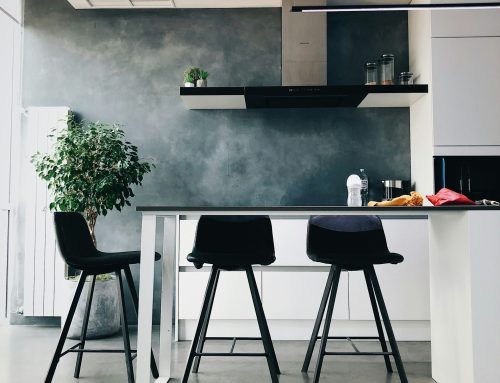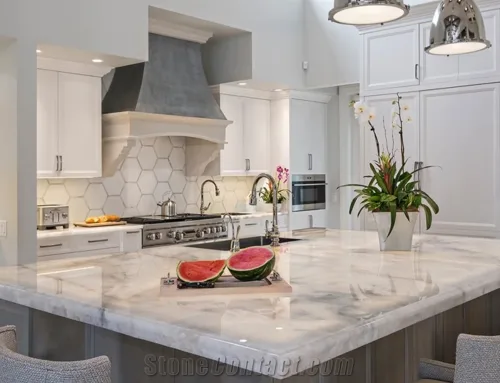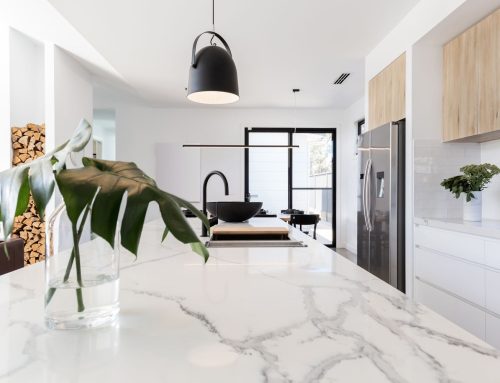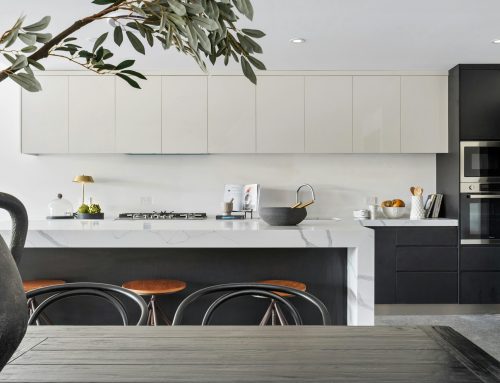
Compact kitchens demand smart design choices. Every material needs to work harder—visually and functionally. Many homeowners worry that quartzite might feel too bold or heavy for a smaller kitchen, but when selected and installed correctly, quartzite can actually make compact kitchens feel brighter, cleaner, and more refined.
Here’s how quartzite works in smaller kitchens—and how to use it the right way.
Why Quartzite Works Well in Compact Kitchens
Quartzite brings several advantages that are especially valuable in tight spaces:
-
Reflects light, helping rooms feel more open
-
Adds natural depth without visual clutter
-
Delivers durability for daily use
-
Creates a high-end look with minimal material
In compact kitchens, you don’t need more materials—you need better ones. Quartzite delivers impact without excess.
Choose Light, Calm Quartzite Colors
Color selection is critical in smaller kitchens.
Best quartzite choices for compact spaces include:
-
Soft whites and off-whites
-
Light gray or greige tones
-
Warm neutral quartzites with subtle veining
These colors help:
-
Brighten the room
-
Visually expand the space
-
Keep the design feeling clean and open
Very dark or heavily fractured slabs can work, but usually only as a small accent.
Keep Veining Subtle and Balanced
In a compact kitchen, too much movement can feel chaotic.
Look for quartzite with:
-
Flowing or linear veining
-
Low to moderate contrast
-
Even distribution across the slab
Subtle quartzite adds interest without competing with cabinetry, appliances, or flooring.
Use Quartzite Strategically, Not Everywhere
You don’t need to cover every surface to make quartzite shine.
Great applications in compact kitchens include:
-
Countertops only, paired with a simple backsplash
-
Countertops with a short matching backsplash
-
A small island or peninsula top
-
A full-height backsplash behind the range
Targeted use keeps the space feeling intentional rather than crowded.
Full-Height Quartzite Backsplashes Can Help Small Kitchens
While it may sound counterintuitive, a full-height quartzite backsplash can actually simplify a small kitchen.
Why it works:
-
Fewer grout lines than tile
-
Cleaner visual flow
-
Makes ceilings feel taller
-
Reduces visual noise
This works best with lighter quartzite and minimal veining.
Choose Simple Edge Profiles
Ornate edges add visual weight—which compact kitchens don’t need.
Best edge profiles for small spaces:
-
Eased edge
-
Softened square edge
-
Thin mitered edge (for modern designs)
Clean edges help quartzite feel lighter and more refined.
Finish Choice Matters More in Small Kitchens
Finish affects both appearance and maintenance.
| Finish | Why It Works in Compact Kitchens |
|---|---|
| Polished | Reflects light, feels brighter |
| Honed | Soft, modern, calm |
| Leathered | Best used sparingly |
Polished finishes are often the safest choice when natural light is limited.
Match Quartzite With Light or Simple Cabinetry
Quartzite looks best in compact kitchens when paired with:
-
White or off-white cabinets
-
Light wood tones
-
Simple slab-style doors
Avoid combining busy quartzite with heavy cabinet detailing—balance is key.
Durability Is a Big Win in Small Kitchens
Compact kitchens often see heavy use.
Quartzite handles:
-
Daily cooking
-
Tight prep areas
-
Frequent cleaning
-
High-traffic use
Its scratch resistance and heat tolerance make it especially practical where counters do a lot of work in limited space.
Common Mistakes to Avoid
✘ Choosing overly dark or busy slabs
✘ Mixing too many textures and patterns
✘ Using heavy edge profiles
✘ Ignoring lighting conditions
✘ Over-designing a small space
Quartzite works best when the rest of the kitchen is kept simple.
Final Takeaway – Quartzite in Compact Kitchens
Quartzite isn’t too much for compact kitchens—it’s often the perfect upgrade when chosen thoughtfully.
With the right color, veining, finish, and placement, quartzite can:
✨ Make small kitchens feel brighter
✨ Add luxury without clutter
✨ Hold up to daily use
✨ Elevate the entire space
In compact kitchens, quartzite proves that you don’t need more space to make a big impression—you just need the right material.